Oven Cleaning: The Right Way to Cut Through Baked-On Grease
6 min read · 10 Ten Cleans Editorial Team
The oven is the most avoided cleaning job in the British home, and for good reason — baked-on grease, carbonised spills, and a fume-heavy interior make it unpleasant and slow. But a professional oven clean is methodical, not magical, and once you know the steps it is far less daunting than it looks.
Why ovens get so bad
Every time you roast or bake, fat aerosolises and settles on the walls, door, and racks. Over weeks it polymerises into a hard amber varnish that no everyday spray will shift. The longer it sits, the more it smokes and taints your food.
The professional method
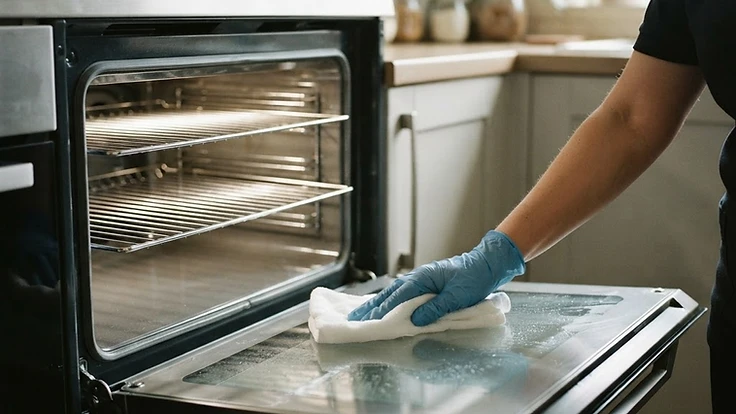
First, remove the racks and soak them in a hot, degreasing solution. While they soak, apply a non-caustic oven cleaner to the interior walls, base, and the inside of the door, and leave it to dwell for the full contact time on the label — this is the step most people skip, and it does the heavy lifting. Then agitate with a non-scratch scourer, working top to bottom, and wipe every surface with a clean damp cloth until no residue remains. Finish the glass door with a streak-free microfibre.
What not to do
Never use caustic cleaners on aluminium or self-cleaning linings, and never spray the heating element directly. If your oven has a catalytic lining, do not scrub it — gentle wiping only.
Keeping it clean
A wipe of the interior after each roast, and a proper deep clean every three to four months, keeps an oven at the standard a letting agent or a fastidious cook expects. Our deep clean service includes the oven as standard — book it alone or as part of a full kitchen reset.